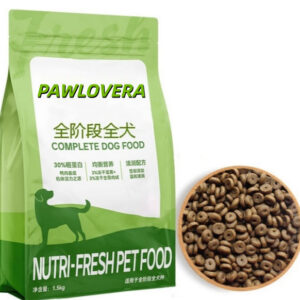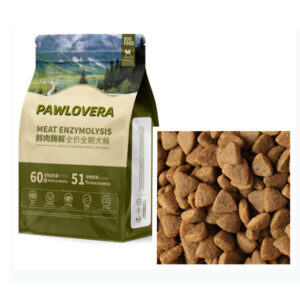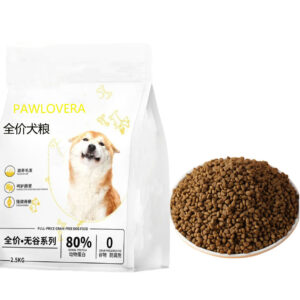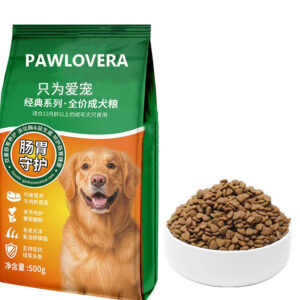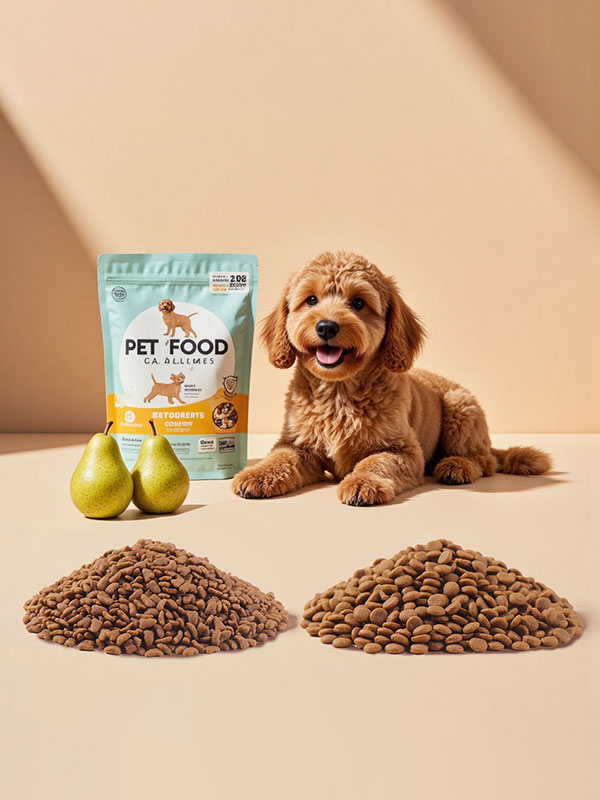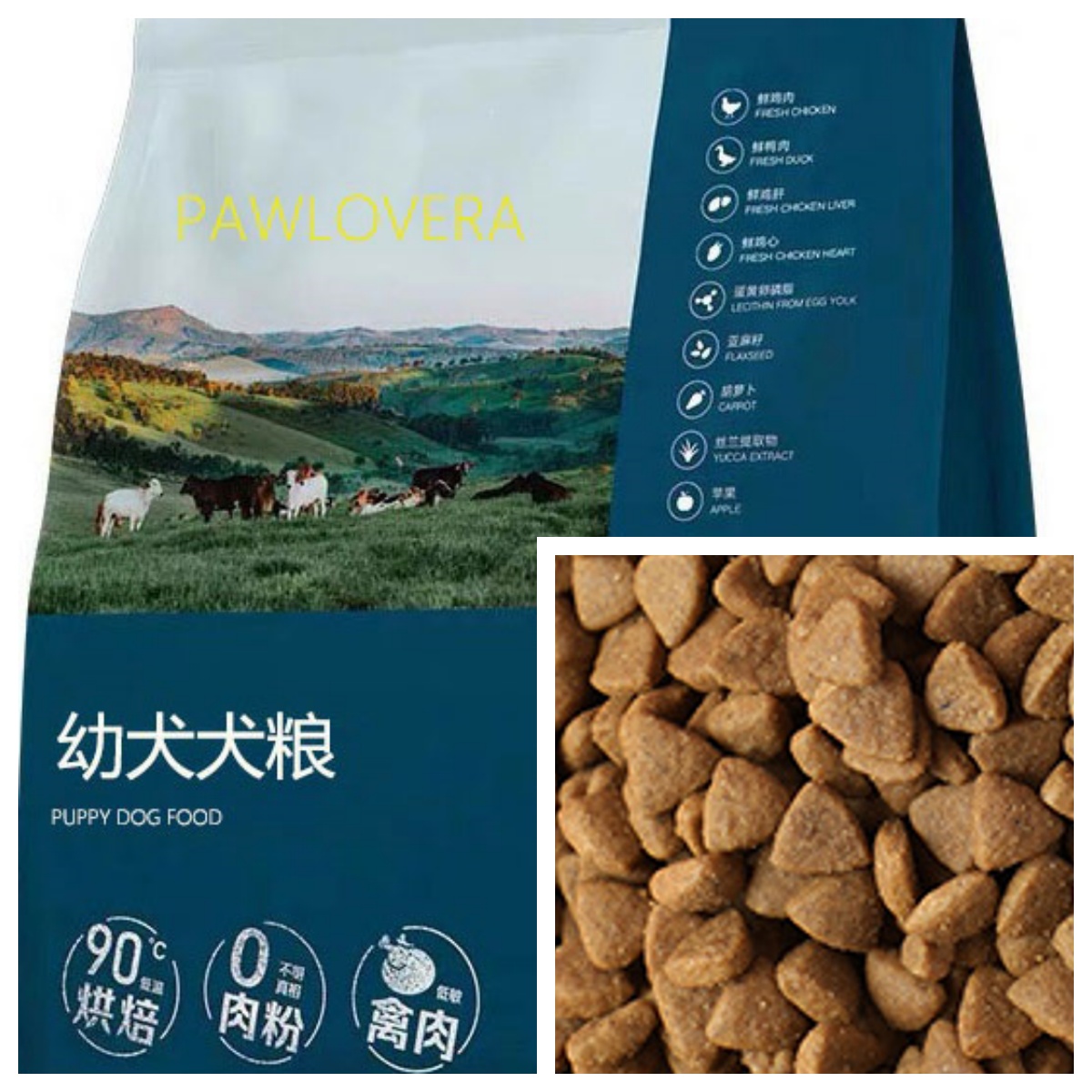
32% Crude Protein Prebiotic Full Price Puppy Dry Dog Food
Core advantage: Accurately meeting the special needs of puppies.
Compared with adult dog food, its high protein setting (32%) is not a “show off”, but a precise response to the physiological needs of puppies: · High energy nutrition, supporting explosive growth: 32% crude protein is much higher than AAFCO’s minimum recommendation for puppies (22.5%). Puppies reach their peak growth rate between 4-7 months of age and have a high demand for protein. The high protein design of this food provides sufficient “building materials” for muscle growth, tissue development, and immune system construction, filling the nutritional gap of ordinary adult dog food (about 18% -23%). ·Probiotics escort, conquer the “glass stomach”: the intestinal microbiota of puppies is not yet stable, and they are prone to soft stools. Probiotics (such as common FOS, MOS, XOS) are beneficial bacteria “food” that can promote the proliferation of bifidobacteria, maintain intestinal microbiota balance, and fundamentally reduce diarrhea and constipation. Excessive calcium may actually lead to skeletal deformities in large dogs and puppies, so “precise control” is far more important than “blind calcium supplementation”.
Precautions and Applicable Stages ·
Applicable Dog Age: Usually designed for puppies aged 1-12 months, some products may be further divided into “weaning period (1-2 months)” and “growth period (2-12 months)”, and the particles of weaning products are usually smaller and easy to soak.
- Transition of food exchange: It is necessary to gradually replace old food over 7-10 days and observe the condition of feces. Early soft stool is normal and can reduce the proportion of new grains or extend the transition period.
- Puppies with obesity tendency: If the puppy has low exercise or obesity tendency, 32% protein may be high, and around 28% of the product can be chosen.
- Puppies with kidney problems: A very small number of puppies with congenital kidney dysfunction, high protein will increase metabolic burden, and low protein prescription foods should be chosen according to medical advice. Consider particle size: choose according to the size of the puppy. Small dogs require small particles for easy chewing; Large dogs and puppies can choose slightly larger particles to encourage chewing.